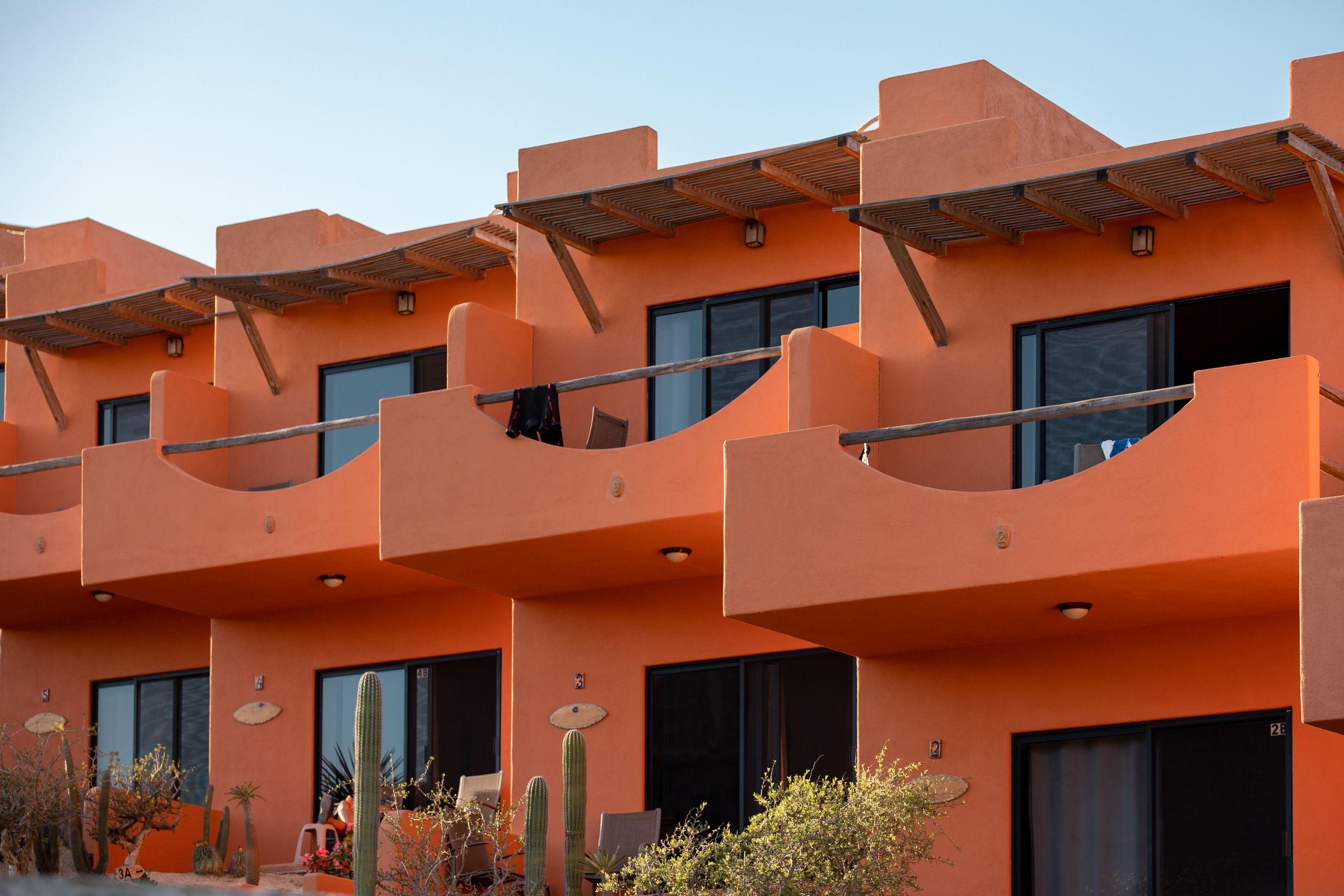
Desert MoonThe closest hotel to the surf in Cerritos Beach.
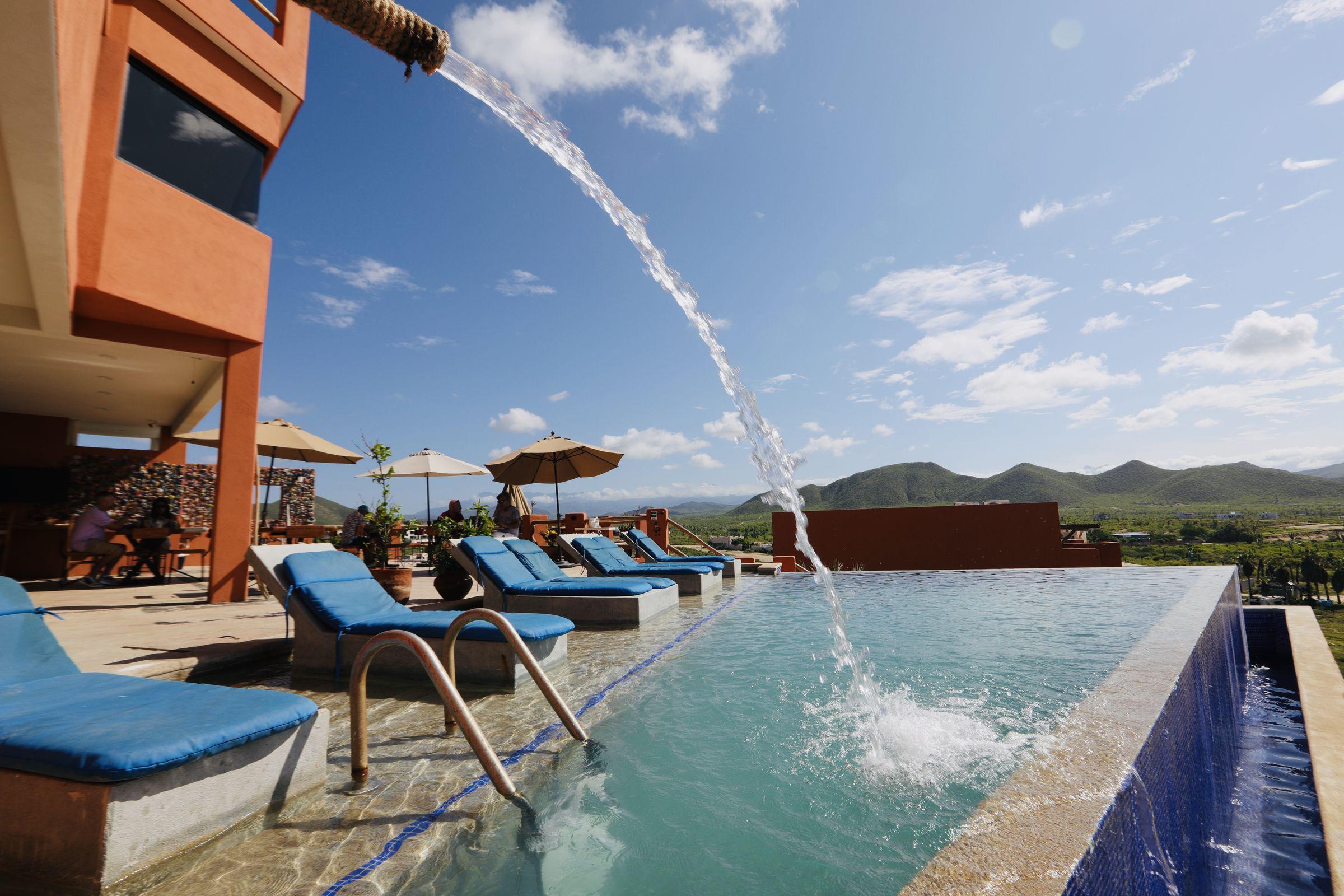
13 rooms, an infinity pool and a rooftop bar, between the desert and the Pacific.
A small hotel built around the wave
Desert Moon sits in the heart of Cerritos Beach, a short walk from the point break and a 15-minute drive from Todos Santos, Pueblo Mágico. Mornings start with a free breakfast; afternoons end at the pool or the bar, watching the sun drop into the ocean.
- rooms
- 13rooms
- to Todos Santos
- 15 minto Todos Santos
- breakfast every day
- Freebreakfast every day
- pool facing the sea
- Infinitypool facing the sea
Four ways to stay
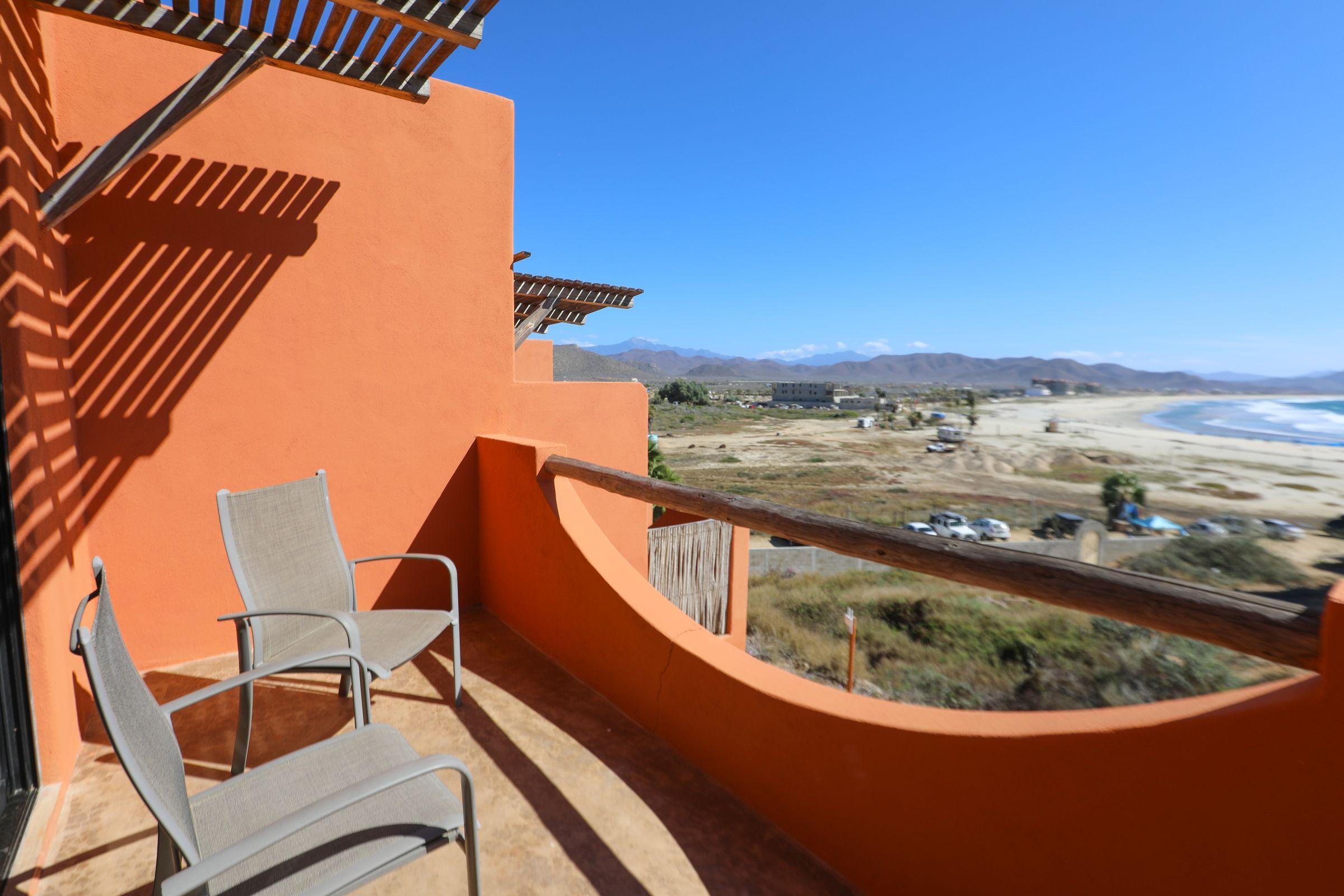
Every room has a private bathroom, air conditioning and fast Wi‑Fi. Most have a kitchenette and an ocean view.
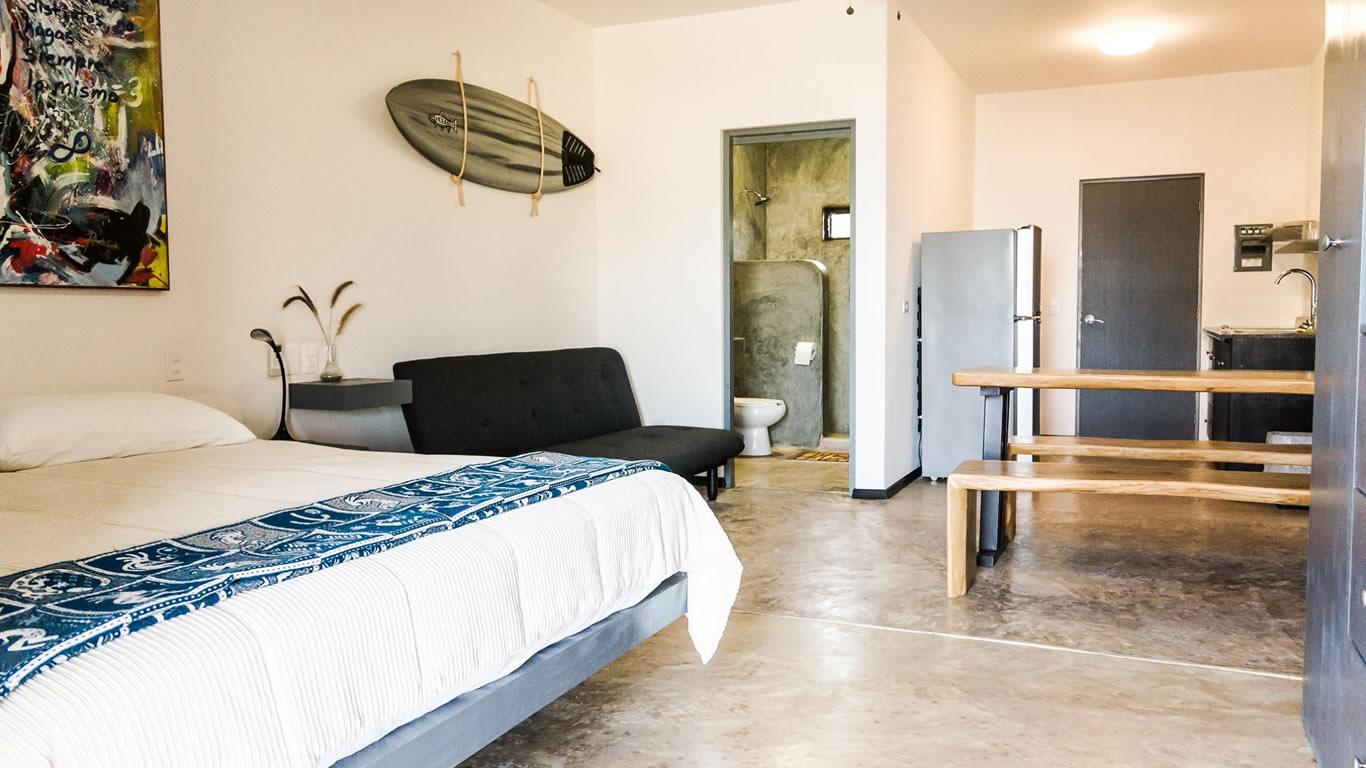
King Suite
A king bed and a kitchenette, steps from the break
Up to 3 guests, 1 king bed
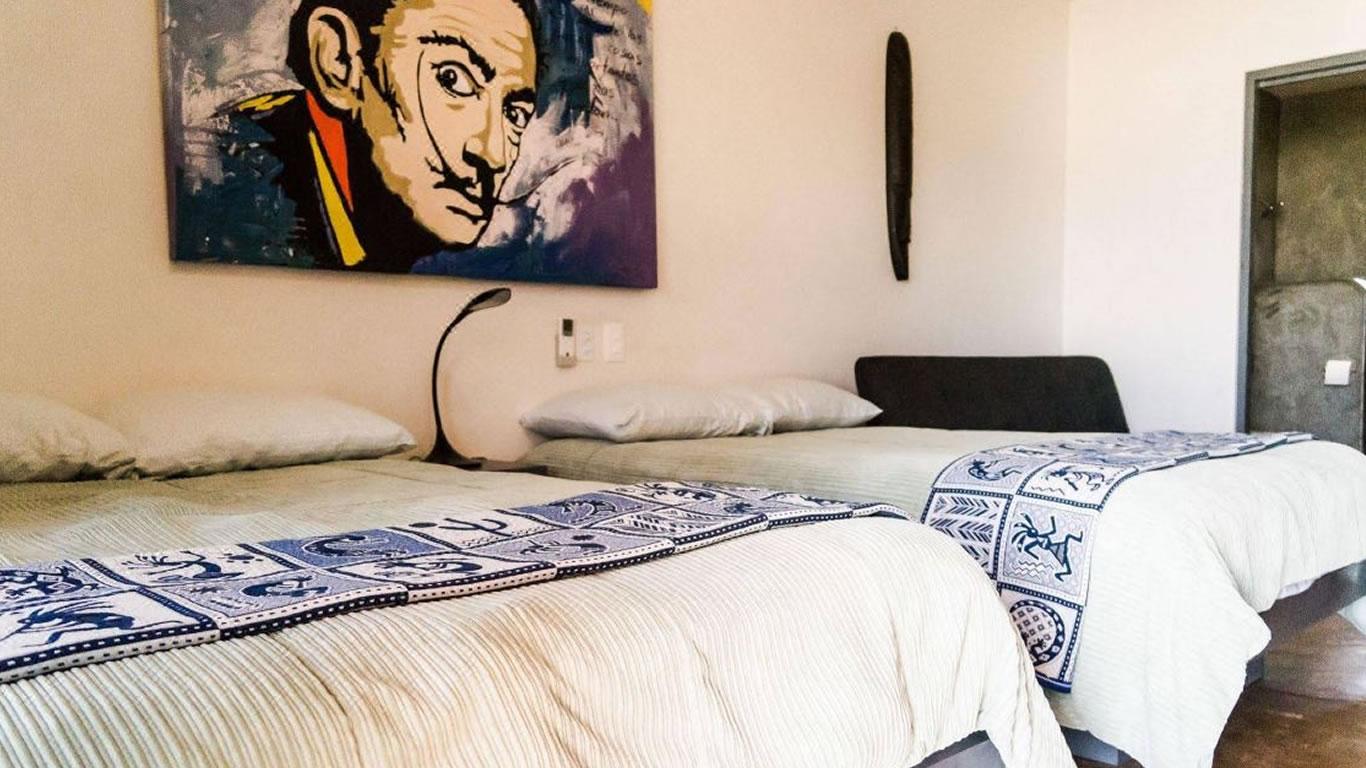
Twin Suite
Two queen beds for friends and families
Up to 4 guests, 2 queen beds
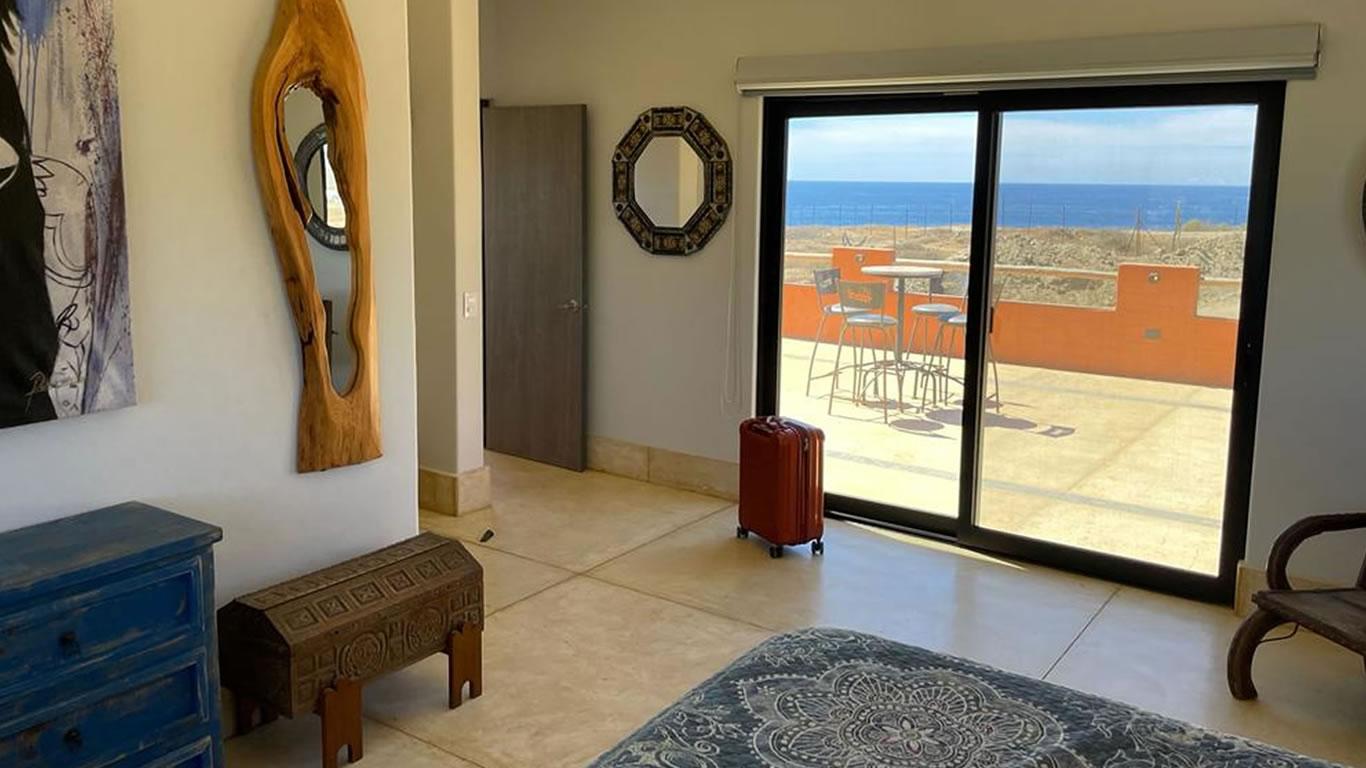
Pent House A
Top floor, sliding doors onto your own terrace
Up to 2 guests, 1 bed
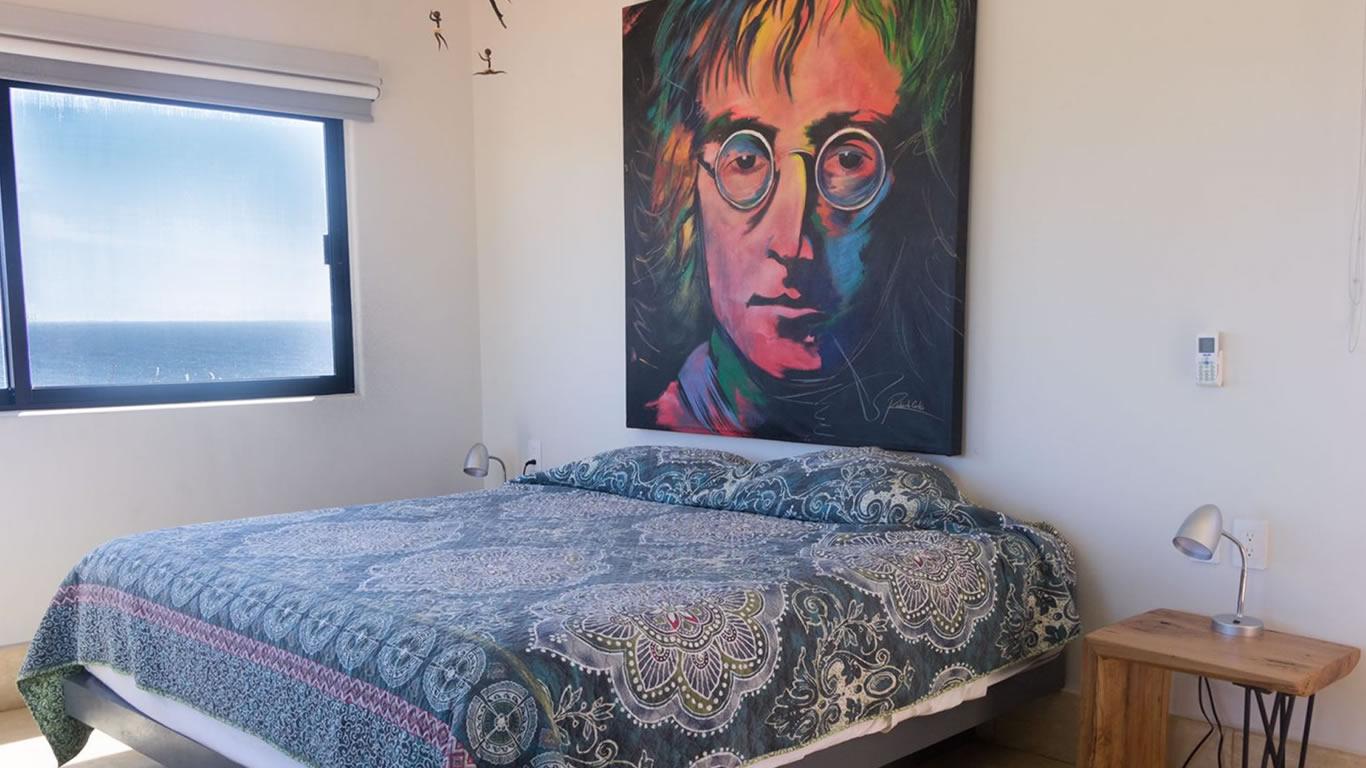
Pent House B
Rooftop room with a view over the ocean
Up to 2 guests, 1 bed
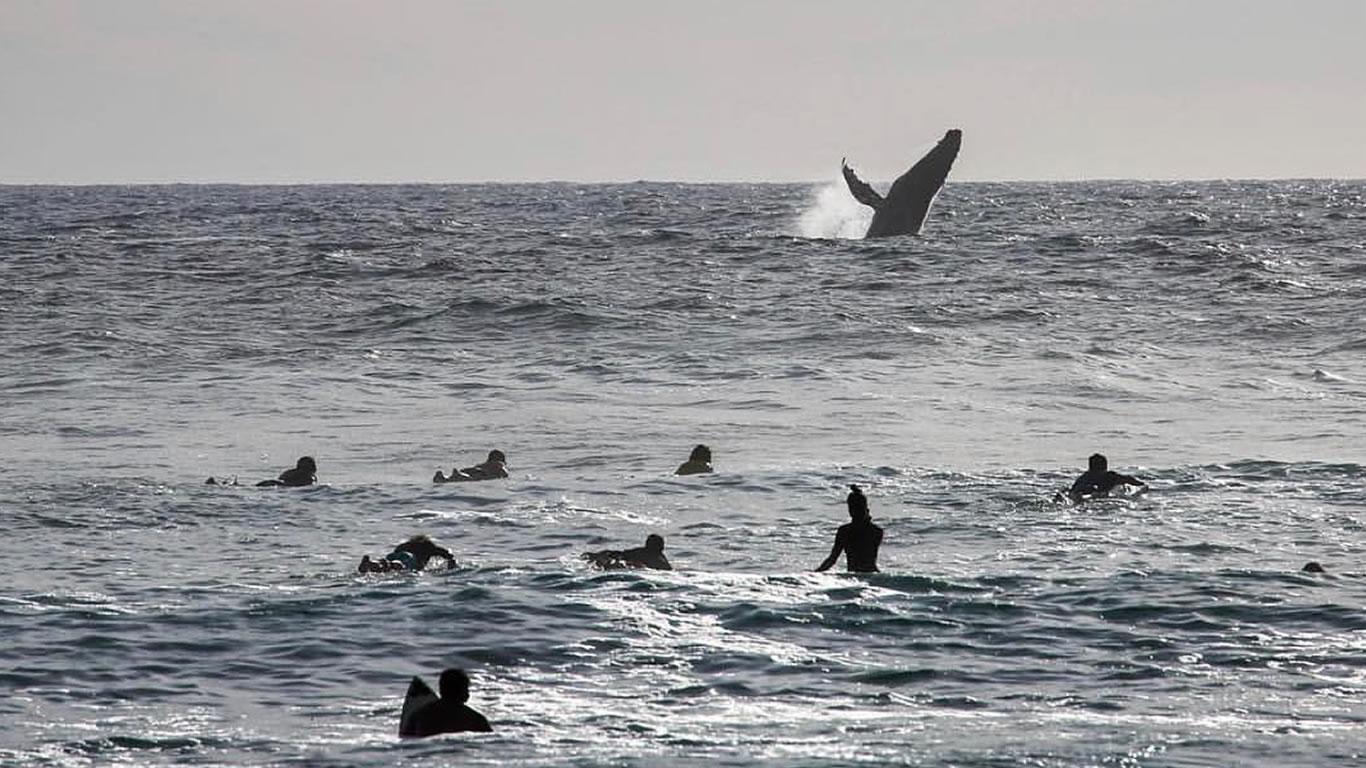
World-class waves, for every level
Beginners find soft whitewater on the inside, experts find the point. We can book you a surf lesson with a local instructor.
Things to do nearby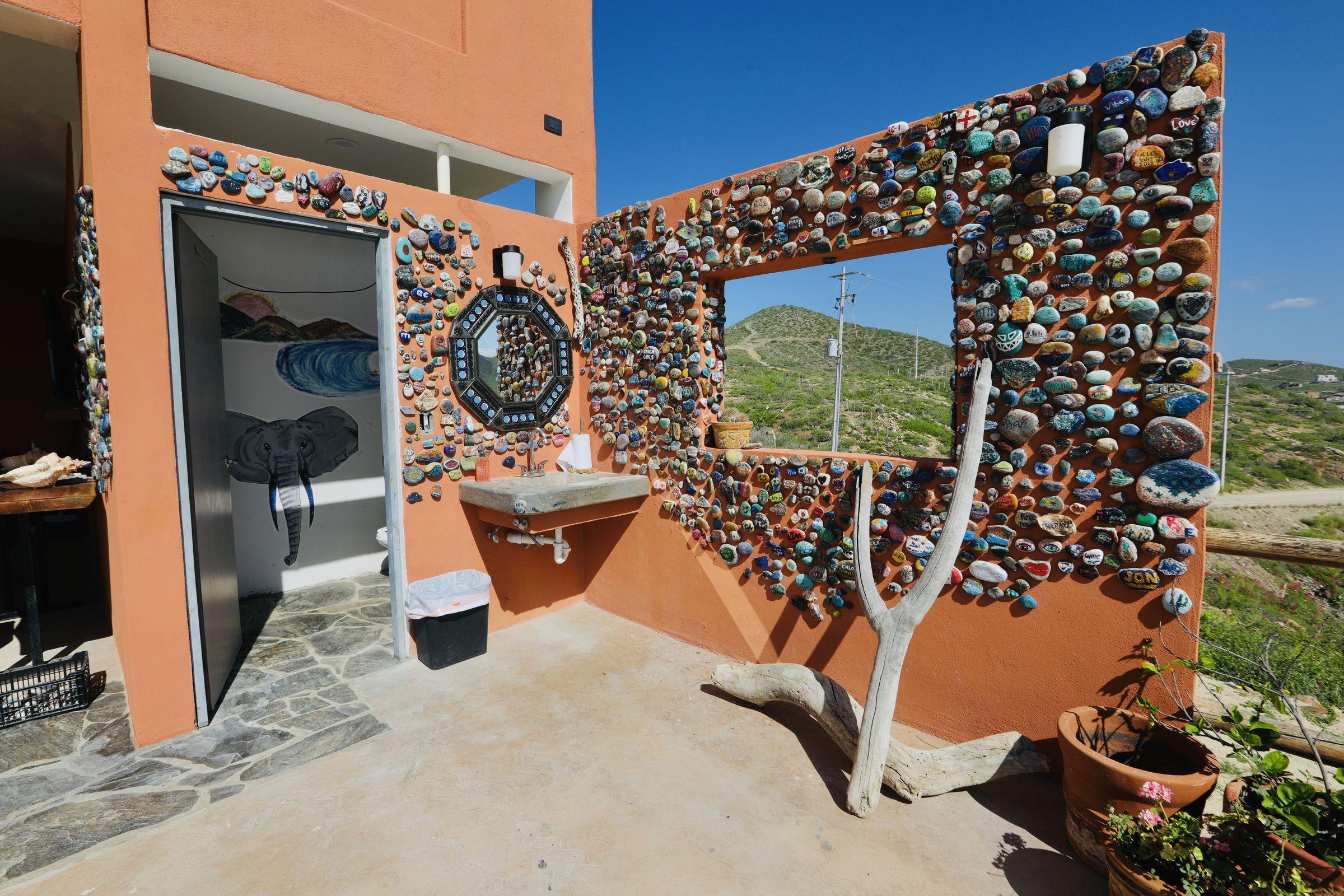

Rip Tide Bar & Grill
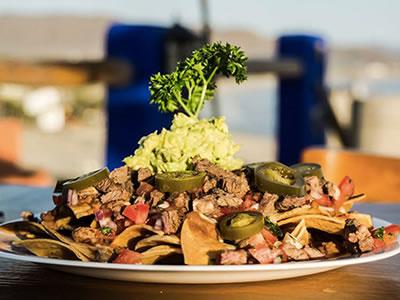
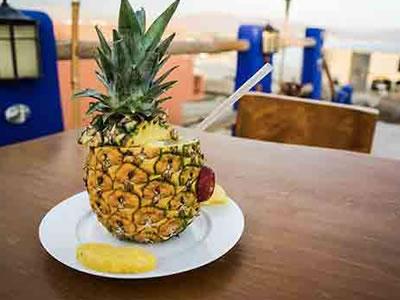
Sea-to-table food, the perfect margarita and a wall of more than 2,000 rocks painted by our guests. Paint yours and leave your story.
See the bar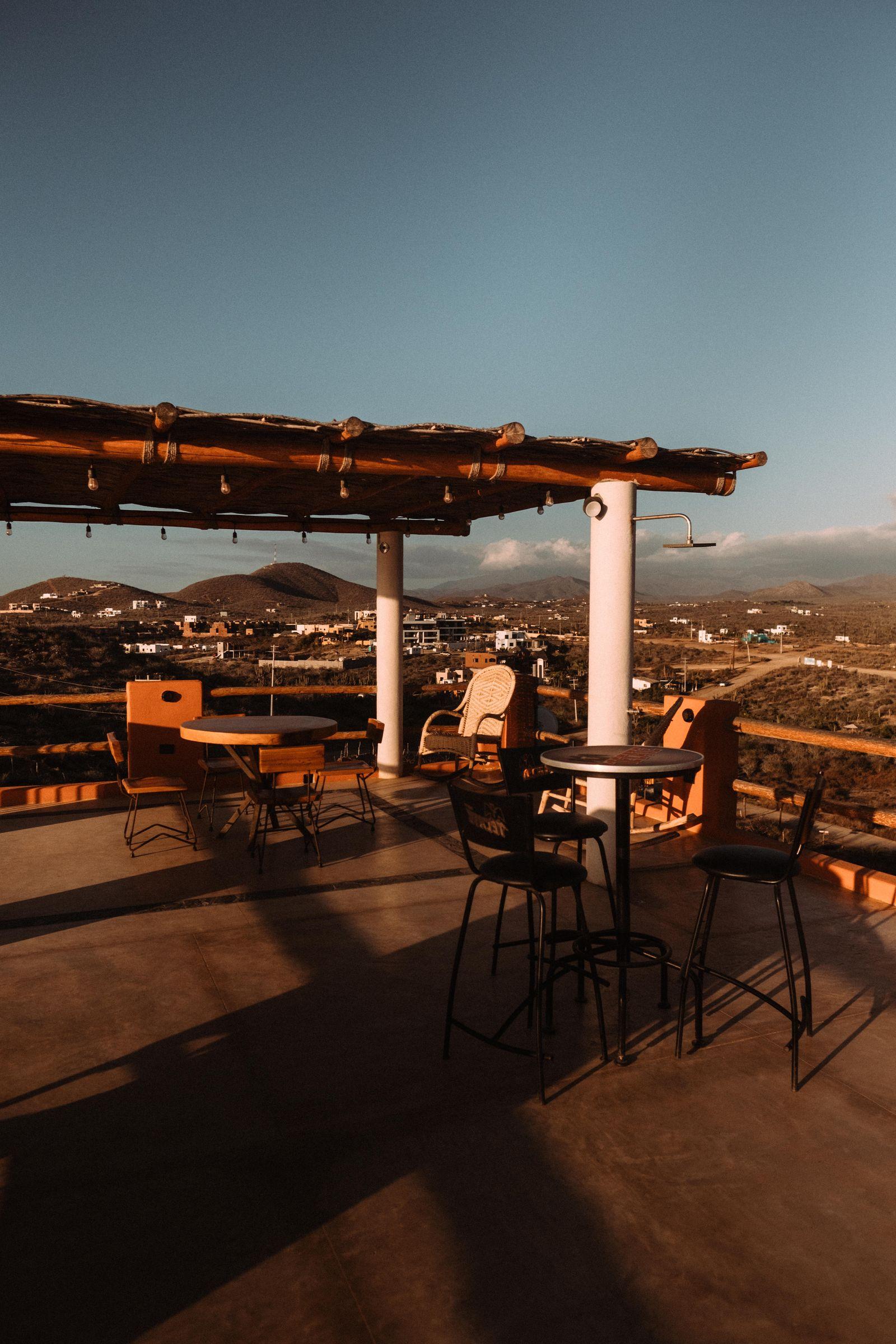
From the rooftop
Tonight's sky, the whales and the waves off Cerritos, updated every day. Swipe or tap to switch.
Tonight's sky
Good for stars
New moon · 1% lit
- Dark at
- 6:55 PM
- Clouds
- 62%
- No moon
- 10.5 h
Best nights this week
- Tonight
- 8 Sun
- 9 Mon
- 10 Tue
- 11 Wed
- 12 Thu
- 13 Fri
What to look for tonight
Tap each one to see how to find it and its story.
Taurus and the Pleiadeseast · from 11:00 PM
How to find it: Follow Orion's belt away from Sirius: you reach orange Aldebaran, and a bit further a little cluster of stars: the Pleiades.
The story: The Mexica called the Pleiades Tianquiztli, "the marketplace". According to the chroniclers, every 52 years they waited to see them at the top of the sky at midnight to light the New Fire and know the world would go on. For the Greeks they were the daughters of Atlas.
Summer Trianglenorthwest · from dusk
How to find it: Three very bright stars make a big triangle: Vega, Deneb and Altair.
The story: In Japan and China, Vega is a weaver and Altair a cowherd, lovers separated by the river of the sky, the Milky Way. They meet only once a year, at the Tanabata festival, on the seventh day of the seventh month.
Pegasus and Andromedaeast · from dusk
How to find it: Four stars make a great square. A line of stars runs from one corner: Andromeda. Next to it, a faint smudge: the Andromeda galaxy.
The story: Pegasus is the winged horse; Andromeda, the princess rescued by Perseus. The smudge is another galaxy, 2.5 million light-years away: the farthest thing you can see with the naked eye. From the rooftop, on a moonless night, you can spot it.
Jupitersoutheast · 5:48 AM
Very bright. Visible from 1:28 AM to 5:48 AM. Best around 5:48 AM, toward the southeast.
Saturnsouth · 9:48 PM
Bright. Visible from 6:18 PM to 2:58 AM. Best around 9:48 PM, toward the south.
Marssoutheast · 5:48 AM
Bright. Visible from 1:08 AM to 5:48 AM. Best around 5:48 AM, toward the southeast.
Leonids · meteor showerNov 17 · In 10 days
Up to 15 meteors an hour in a dark sky, best after midnight. Some moonlight that night.
Whales off Cerritos
38 days until whale season
Humpback season runs from mid-December to mid-April, best from January to March.
How often they're seen, month by month
- NowJanVery likely
- NowFebVery likely
- NowMarVery likely
- NowAprSome days
- NowMayRare
- NowJunRare
- NowJulRare
- NowAugRare
- NowSepRare
- NowOctRare
- NowNovRare
- NowDecSome days
Which whales you can see
Tap each one to see how to recognize it.
Humpback whaleDec – Apr · Very common
Size: 14 to 16 m (46–52 ft)
How to recognize it: A wide, bushy blow about 3 m high. It breaches and slaps the water with its very long pectoral fins. When it dives it shows its tail, black and white underneath.
Fun fact: They come from Alaska and Canada to have their calves. Males sing songs up to 20 minutes long, and every tail pattern is unique, like a fingerprint.
Gray whaleJan – Mar · Sometimes
Size: 13 to 15 m (43–49 ft)
How to recognize it: A heart- or V-shaped blow. No dorsal fin, just a row of bumps along the back, and mottled gray skin.
Fun fact: It makes one of the longest migrations of any mammal: from the Arctic to the lagoons of Baja California Sur, about 16,000 to 20,000 km round trip. Sometimes it passes along this coast.
DolphinsAll year · Very common
Size: 2 to 4 m (7–13 ft)
How to recognize it: Fins rolling in and out of the water in a group, sometimes very close to shore. Now and then they ride the waves next to the surfers.
Fun fact: The most common here are bottlenose and common dolphins, traveling in groups of dozens.
Blue whaleJan – Apr · Rare
Size: Up to 25 – 30 m (80–100 ft)
How to recognize it: A very tall, straight blow, up to 9 m. A very long blue-gray back with a tiny dorsal fin near the end.
Fun fact: It's the largest animal that has ever lived. Rare on this side; it's seen more in the Gulf of California, around Loreto.
OrcaAll year · Rare
Size: 6 to 9 m (20–30 ft)
How to recognize it: Black and white, with a tall dorsal fin, up to 1.8 m on males.
Fun fact: Though called the "killer whale", it's actually the largest dolphin. They pass along the coast now and then, with no set season.
Why do they come here?Right now they're on their way to CerritosAlaska 10 °C → Cerritos 30 °C
Today the sea is 10 °C in the Gulf of Alaska and 30 °C off Cerritos, by satellite.
Their year, month by month
- JanHere in Cerritos
- FebHere in Cerritos
- MarHere in Cerritos
- AprHeading back north
- MayFeeding up north
- JunFeeding up north
- JulFeeding up north
- AugFeeding up north
- SepFeeding up north
- OctFeeding up north
- NovTraveling down the coast
- DecHere in Cerritos
Here in Cerritos · Mid-Dec – Mar
Calves are born with very little blubber and couldn't handle icy water, so mothers come to this warm, calm sea. They barely eat: they live off their fat and produce hundreds of liters of milk a day. Best viewing is January to March.
Heading back north · Apr – May
With their calves bigger, they start the trip back. They can arrive up north having lost up to a third of their weight.
Feeding up north · May – Oct
They spend these months in the cold waters of Alaska and Canada, full of krill and small fish, eating nonstop to build a thick layer of blubber for the rest of the year.
Traveling down the coast · Nov – Dec
When the north gets cold, they swim south for over a month along the Pacific coast. The California Current, a cold-water current, also flows down this coast and meets warm tropical waters in Baja California Sur.
Sea temperature: NOAA / NASA JPL (MUR SST, satellite), updated daily.
How to spot them
Look for the blow
Before you see the whale you see its spout: a white puff about 3 meters high over the water.
Watch the open sea
Look past where the waves break. When one surfaces, keep watching that spot: it almost always comes up again.
Go early
Mornings are usually calmer. Bring binoculars if you have them, and a coffee.
Season: humpback whales on the Pacific coast of Baja California Sur. Wind: MET Norway, updated hourly. They're wild animals, so no date is a guarantee.
Surf in Cerritos
Today
Big
1.2–2 m (4–7 ft)
For experienced surfers.
Best time: 8 AM – 9 AMWind 8 km/h · clean
- Swell
- 1.1 m · 16 s
- Direction
- Northwest
- Rating
Today, hour by hour
- 8 AM: 1.5 m, Wind 8 km/h (Best)
- 9 AM: 1.5 m, Wind 13 km/h
- 10 AM: 1.5 m, Wind 14 km/h
- 11 AM: 1.5 m, Wind 16 km/h
- 12 PM: 1.5 m, Wind 17 km/h
- 1 PM: 1.5 m, Wind 19 km/h
- 2 PM: 1.6 m, Wind 22 km/h
- 3 PM: 1.6 m, Wind 23 km/h
- 4 PM: 1.7 m, Wind 21 km/h
The next days
Typical wave size during the day and the best window.
- 8 Sun1.2–1.9m7–12 PM
- 9 Mon1.1–1.7m8–11 AM
- 10 Tue1.2–2.2m9–1 PM
- 11 Wed1.3–2.2m9–1 PM
- 12 Thu1.5–2.6m7–9 AM
- 13 Fri1.9–2.9m7–12 PM
Best day this week: 9 Mon · Medium, 8 AM – 11 AM
How to read it
Size
Wave height at the beach, measured on the face. Small means waist-high or less; big means overhead.
Period
Seconds between waves. Over 12 s the waves come in stronger and more organized.
Recommended hours
We highlight where good size meets light wind. Usually early morning, but some afternoons calm down too.
Estimate from the NOAA WaveWatch III model (via PacIOOS) and MET Norway wind. Real conditions change with the tide and the sandbar; check Surfline before you paddle out.
Included with your stay
- Closest hotel to the surf point
- Infinity pool
- Free breakfast
- Bar & restaurant
- Fast Wi‑Fi
- Parking
What guests say
Real reviews from guests on Google and Tripadvisor.
- Wood-fired pizza
“…you MUST go there just for the wood fire pizza!”
Katy Varaleauon Google · 2022 - The team
“Nice smaller place where you get to know everyone within a day or two.”
Bret Piersonon Google · 2021 - Ocean view
“Great view from our balcony and nice to be able to walk right to beach.”
James Scotton Google · 2022 - The beach
“If you need to relax and enjoy the waves this is the place to go.”
Xavier Lamon Google · 2022
Short excerpts in the guests' own words. Full reviews on Google.
Find us
Parcela 2740, El Pescadero, Baja California Sur. About an hour and a half from Los Cabos airport.
info@desertmoonhotel.com